Winter Sowing
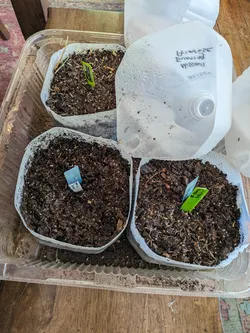
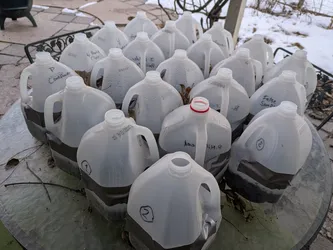
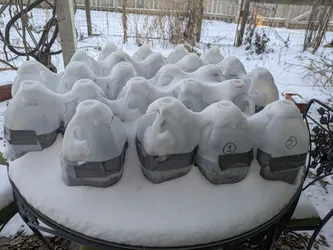
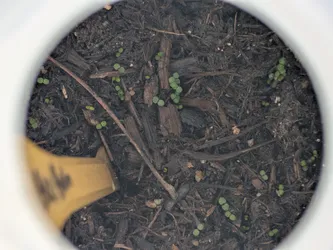
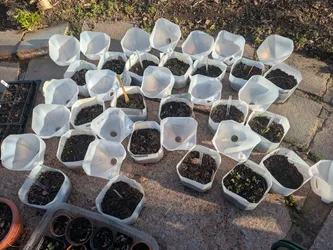
Winter sowing native plants in milk jugs is a low-maintenance, cost-effective way to start a garden by mimicking natural conditions. Many native seeds require "cold stratification"—a period of freezing and thawing—to break dormancy and germinate in the spring. For best results, start your seeds between mid-December and late January.
1. Gather Your Supplies
- Clear or translucent plastic gallon milk/water jugs
- Lightweight, pre-moistened potting mix
- Heavy-duty duct tape or packing tape
- China Markers (standard Sharpies often fade in the sun)
2. Prepare the Milk Jugs
- Discard the cap; we need rain, snow, and air to enter the jug.
- Poke 4-8 drainage holes in the bottom; a screwdriver or large nail works well.
- Cut horizontally around the center of the jug, leaving about 1 inch intact just below the handle to act as a hinge.
- Label the jugs with their species names (or reference numbers if you'll reuse them a second year).
3. Sowing the Seeds
- Fill the bottom half of each milk jug with 3-4 inches of moist potting soil.
- Sow seeds about as deep as the seed is long. Many native seeds are small and only need to be pressed onto the surface.
- Lightly mist the surface after sowing to ensure good seed-to-soil contact.
4. Sealing and Placement
- Close each jug and wrap duct tape around the cut seam to keep the top secure.
- Place the jugs outdoors in a sunny spot where they are exposed to the elements. Avoid placing them under eaves where they won't receive rain or snow.
5. Spring Maintenance & Transplanting
- Check moisture weekly: If the soil looks dry or there is no condensation inside the jug, add water through the top opening.
- Once seedlings emerge and spring temperatures stay consistently above 50°F, open the jugs during the day to prevent overheating.
- If seedlings are crowded (more than 2 dozen in your milk jug), thin them out or transplant some into small pots. Yogurt cups work well; just poke several holes in the bottom for drainage. Potted seedlings may need to be covered or brought in during a frost, since they won't have the jug acting as a mini greenhouse.
- Transplant into your garden once they have 2-3 sets of "true" leaves and the threat of hard frost has passed. Because they grew outside, they are already "hardened off" and ready for the ground.
What if my seeds don't sprout?
Some species can be very slow to germinate. If you remove the top of the milk jug and keep it moist and in partial sunlight, you may find some appear in May or even June! Or, you can dump the soil into a pot or garden bed to reuse. In rare cases you may even discover seeds germinate the following year.
What to expect after transplanting
Your young plants will appreciate a little water any spring or summer week that it doesn't rain.
Annuals will flower this year and die over winter, so you'll need to let them reseed for next year.
Perennials typically don't flower in their first year; instead they focus on developing a root system that can sustain them over the winter, when they die back significantly. You can cut back perennials in fall/winter for a tidy appearance, but leaving stems and seedheads in place can provide winter interest and significant value to wildlife. In spring, notice whether they grow new stems and leaves at the ground level; if so, you can cut out old/dry stems to encourage the new growth. Any cut stems left on the ground or in a brush pile continue to provide habitat.
In their second year, perennials may not grow to their full height, but will leaf out more broadly and produce a few flowers. In their third year, perennials reach their full height and number of blooms.
Biennials have a two year life cycle, with the first year focusing on foliage and the second year flowers.
A few plants won't make it, leaving gaps you can fill in. Expect to experiment a bit to get the garden layout that is right for you and your plants. If a species doesn't thrive where you've planted it, or if it thrives too well and crowds out other things, you can usually transplant it to a more appropriate area. Natives that you find too large or aggressive may work well in a shadier location or with poorer soil.